
We Ate the Gods
“Hunger is not a glitch of modernity but a recurring human condition — a tide that recedes and returns, reshaping the shore each time.”

THE NEW CRITIC
Toni Burns is the 22-year-old writer of Toni’s Curiosity Cabinet. She currently studies MA Arts, Philosophy, and Cultural Institutions at the University of Liverpool.
I was eight the first time I took communion, and I wasn’t supposed to. I wasn’t Catholic, hadn’t been baptised, and didn’t even know what the ritual really meant. But I was attending Mass with a neighbour, and when the line formed and she gestured for me to follow, I did. I walked up to the altar, mimicked the motions, and placed the wafer on my tongue. I remember expecting something to happen — maybe a warm light, a holy shiver, some sign that I had crossed a threshold into mystery. But there was only the dry, dissolving taste of paper and the quiet guilt of having taken something that wasn’t mine to receive. I stood there, suspended between the altar and the pews, waiting for a sense of reverence to wash over me. Instead, I just felt hungry. Hungry in a way I couldn’t name, a hollowness that wasn’t about the absence of breakfast but about the absence of something more elusive. It was as though I had reached for the sacred and come up with a prop, a gesture emptied of its weight. That moment has stayed with me for years, not because it was profound, but because it wasn’t — because it was a collision between the desire for meaning and the anticlimax of its absence. Even then, without language or belief, I sensed that I was acting out an old, shared ache. In hindsight, I recognise it as an early encounter with a question that continues to shape my life: what fills the space left when certainty and faith disappear?
That hunger, more than doubt, more than belief, is where this begins. It is not an abstract longing but one that registers in the body: a tightness in the chest, a restlessness in the hands, a pause in conversation when a certain kind of silence falls. It’s the quiet ache you feel when the world seems paper-thin, when you suspect there’s a vastness humming just beyond your reach. Philosopher Martin Heidegger called this Geworfenheit, or “thrownness” — the sense of being flung into a world we did not choose, searching for footholds on uncertain ground.1 For me, this hunger is not for a return to some lost theological certainty, but for presence, for awe, for the feeling that life is not merely a sequence of obligations and pings but a luminous thing worth living. Critical theorist Hartmut Rosa, writing on resonance, argues that human beings thrive when the world feels alive and responsive to us when we speak: when something answers back.2 That is what the hunger seeks: an answering presence. And the irony of modern life is that the more connected we become, the sharper this hunger grows, as though each new thread of connectivity only reminds us of the space between.
When I say our generation is spiritually hungry, I don’t mean we are all turning back to attending Sunday service. The statistics show otherwise: religious affiliation is collapsing, weekly attendance is plummeting, and “none” is now one of the most common answers to questions about faith identity. But absence does not mean disinterest. Charles Taylor’s “nova effect” captures what’s happening instead: the collapse of a single, authoritative spiritual narrative has scattered the sacred into countless fragments, each one a possible entry point into meaning.3 We are spiritual foragers now, piecing together personal cosmologies from astrology apps, Tarot TikToks, Buddhist meditation podcasts, protest chants, vintage Catholic aesthetics, and religious Lana Del Rey ballads. To an older generation, this bricolage might seem unserious. But for us, it’s a form of survival — a way to keep something sacred alive in a world that often feels hollow.
Still, it’s important to say that some of us do return to organised religion. I have friends who found their way back to the church not through doctrine but through a longing for embodied community, for rituals that can be felt in one’s bones. They talk about craving something thicker than what digital life offers: the smell of incense, the rhythm of kneeling and rising, the unison of voices in a hymn. For some, faith is also political — it is a way to root their activism in something older than the news cycle, to draw on a moral tradition that doesn’t dissolve under the glare of constant opinion. They don’t return naively; they carry with them the critiques and doubts of our generation but also a willingness to let the hunger be met by something structured, ancient, and communal. For others, Islam, Judaism, or Buddhism becomes a home they once knew only from the outside, offering a set of inherited practices that become less about metaphysics and more about shared rhythm, language, and care. This return doesn’t negate the bricolage approach; it exists alongside it, as another way the hunger tries to find a home. Both routes, whether toward ancient structures or self-stitched ones, are responses to the same restlessness.
The gestures we make toward meaning often wear an ironic mask. We read our horoscopes religiously while mocking the idea of taking them seriously. We speak about “manifesting” in the same breath that we admit our skepticism. Irony has become our armour, the protective layer between our longing and the fear of disappointment. But it is also a form of mourning: it allows us to touch the sacred without declaring ourselves vulnerable to it. A meme about “being blessed” when your Amazon package arrives early follows the same structure as a prayer of gratitude; it marks an occasion, invites recognition, and connects us to a shared understanding, but by cloaking it in humour, we avoid the exposure of sincerity.
Even our daily habits take on ritual form. The skincare routine — serums layered like vestments, the careful order of application, the soft lighting of the bathroom mirror — can feel like a liturgy of the body. These gestures create a small island of order in a fractured day, a space where time is marked and transformation is promised. Cultural anthropologist Victor Turner would call this a liminal space — a threshold between the ordinary and the extraordinary.4 Online, these rituals are often shared: a morning routine posted to TikTok becomes a testimony, inviting viewers into a micro-community of shared intention. Yet, as philosopher Byung-Chul Han warns, these practices often collapse into the logic of self-optimisation, where meditation becomes a productivity hack, breathwork a means to increase efficiency, journaling a tool to sharpen one’s “personal brand.”5 This is where technology both aids and distorts our hunger: it can hold space for ritual connection, but it can also turn the sacred into content, flattening it into something consumable.
The commodification of awe is perhaps the clearest symptom of this distortion. Neuroscientists have shown that awe slows our perception of time, expands our sense of self, and increases our generosity toward others. For centuries, religions cultivated awe deliberately, through cathedral ceilings, choral music, and sacred art. Today, brands attempt to replicate it through immersive pop-ups, curated Instagram backdrops, influencer retreats designed to “change your life.” Awe has been extracted from its sacred commons and repackaged for sale. And yet, our participation in these manufactured moments suggests the hunger for awe hasn’t gone away — it’s simply seeking any crack through which to re-enter our lives.
Part of the reason this hunger feels so persistent is that it’s inherited. Sociologist Danièle Hervieu-Léger’s concept of the “chain of memory” describes religion as a series of transmitted practices and beliefs linking generations.6 Our chain is broken. I think of my neighbour’s rosary, worn smooth from years of use, and wonder what it felt like for her to inhabit a world where every gesture meant something more. I mimic those gestures sometimes. Not because I believe, but because I want to. It’s a form of envy for a coherence I’ve never known. Her God is a presence; mine is a question. Maybe the ache is part of being alive. Maybe the sacred was never about certainty, but about longing well.
Historically, this is not the first generation to feel the ground shift under its feet. The Enlightenment broke the monopoly of church authority, and with it came a wave of existential disorientation: if reason could dismantle revelation, what would replace the moral and metaphysical scaffolding that religion had provided? The Romantic poets responded not with a return to orthodoxy but by locating the sacred in nature, in art, in the subjective depths of the self. After the First and Second World Wars, entire societies faced another crisis of meaning, as the scale of destruction seemed incompatible with any benevolent divine order. In each case, the hunger reappeared, shaped by its era but recognisable in its essence: the need for something that could hold both beauty and suffering without collapsing into despair, and just as often, the need for shelter — for a larger order that promises stability when our own strength falters. For some, this means a framework of meaning; for others, it is simply the comfort of knowing their pain and joy belong to something greater than themselves. The counterculture of the 1960s sought transcendence through psychedelic experience, communal living, and Eastern spiritual imports; their rituals may have looked different from medieval liturgies, but the impulse was the same. If there is any comfort in this repetition, it’s that our hunger is not a glitch of modernity but a recurring human condition — a tide that recedes and returns, reshaping the shore each time.
This dislocation is compounded by a form of loneliness that is not just social but spiritual. We are missing not just company, but a witness. This isn’t merely someone who notices us, but someone who receives us — who sees the unvarnished self without demand for performance. Philosopher Martin Buber’s I–Thou relationship describes an encounter in which the other is met as a full, irreducible presence, not as an object or a role.7 Most of our interactions fall into the I–It category — transactional, fleeting, mediated by screens. Social media offers the simulation of being seen (likes, comments, shares), but these are pings on the radar of loneliness, not the deep recognition that feeds the soul. We are starved not just for meaning, but to be met fully by an “other,” without performance.
The places where I feel most fed are not sacred in the formal sense but instead they operate like chapels: long dinners where no one checks their phone, group chats that function like confessionals, late-night conversations that stretch until dawn. These are my communities of care: small, intentional circles where presence is reciprocal and undivided. They don’t erase the hunger, but they acknowledge it. They hold it without trying to solve it. bell hooks writes that community is not simply the warmth of belonging, but the active work of love, and a practice of tending to one another’s humanity. These pockets of attention in my life are not bound by creed or ritual, but they answer something ancient in me.
Digital subcultures sometimes form similar chapels. These are unofficial sanctuaries where shared obsession becomes a form of kinship. A fandom Discord server can operate like a monastic cell, complete with shared texts, initiatory in-jokes, and rituals of gathering at set times for collective experience, whether it’s a livestream concert or a TV show premiere. Online activist circles hold vigils on Zoom, light candles together across continents, and use hashtags as hymns of solidarity. Even gaming communities create pilgrimage sites, annual conventions where people meet their online companions in embodied form for the first time, marking the moment with the reverence of a long-awaited reunion. These are not trivial; they can be lifelines. And yet, these communities remain vulnerable to the same forces that hollow out other digital spaces: corporate monetisation, attention fatigue, and the gravitational pull toward performance over presence. The question is not whether technology can hold the sacred — it can — but whether we can resist letting the sacred be flattened into spectacle.
Technology complicates even this. It can be a bridge, allowing a friend across the country to attend a memorial or join a meditation group in real time. It can also be a form of sublimation, offering the form of connection without the substance. The difference lies in attention. A Zoom prayer circle can be sacred if we enter it with the same reverence we would a chapel. A viral hashtag can become a form of liturgy if it channels genuine solidarity. But when circulation replaces connection, when visibility is mistaken for intimacy, the gnawing hunger deepens. Rosa would say that resonance requires mutual transformation: we must be open to being changed by what we meet. Algorithms rarely change us; they confirm us. This is the real danger: that our tools for connection become mirrors instead of doors.
A few months ago, I walked past the church where I once took communion. I didn’t feel belief rise within me. But I felt a stillness, the kind that makes space for memory and mystery to surface. I thought about my neighbour’s steady hands on her rosary, my friends scattered across cities and screens, each of us trying to piece together a way to live. I thought about how much of our lives is shaped not by the answers we’ve found, but by the questions we keep asking.
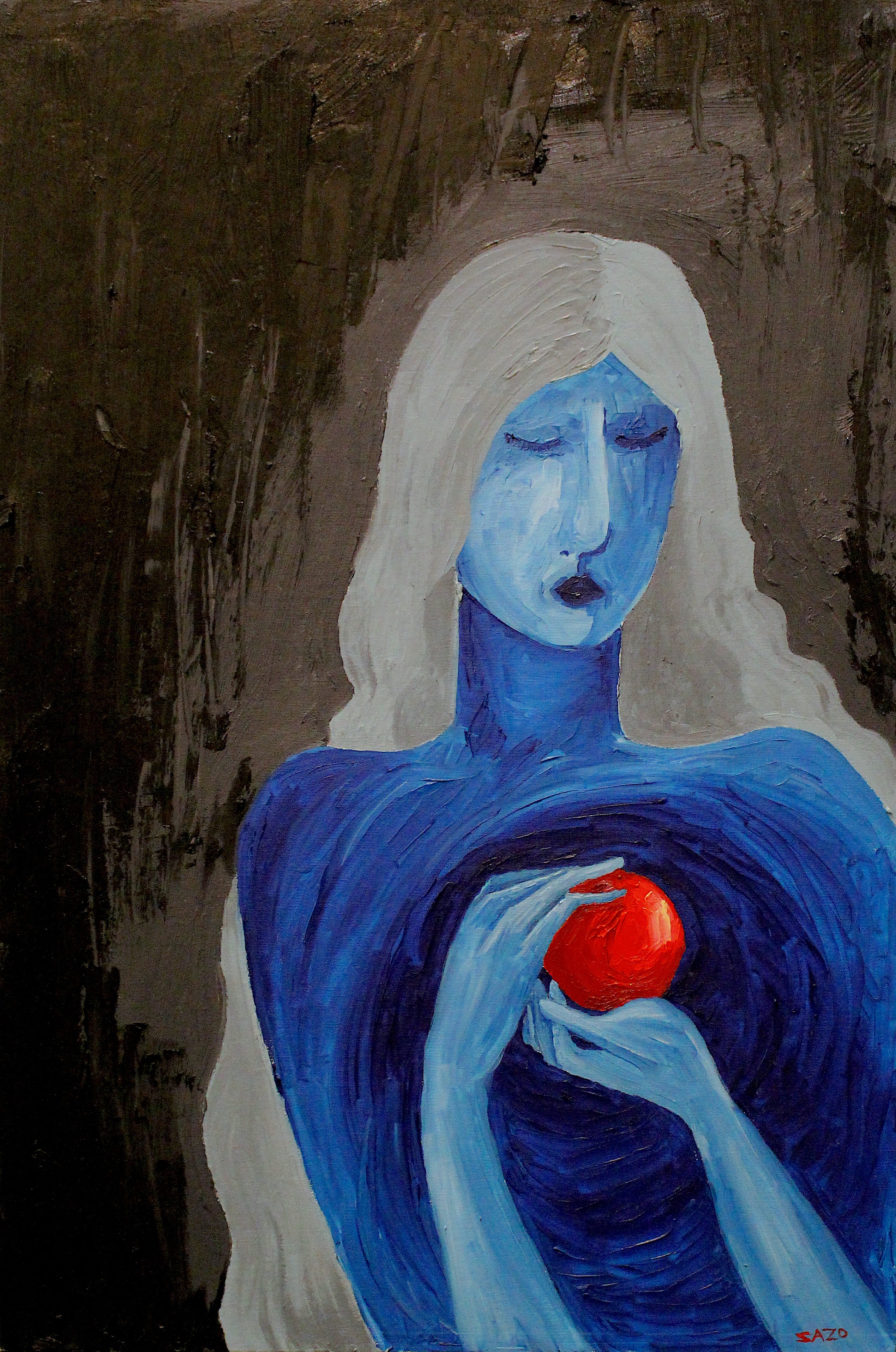
We ate the gods, but they didn’t vanish. They changed shape. They live in our playlists, our memes, our protests, our late-night conversations. Hunger isn’t a flaw to be eradicated; it’s a compass. It points toward where we hurt and where we hope, toward the moments when we break through the surface and glimpse something deeper. If we can follow it, not toward certainty, but toward presence, we might begin to rebuild the sacred in our own language, on our own terms. That might look like refusing irony long enough to speak gratitude out loud. It might mean treating a dinner table, a protest march, or a group chat not as background noise, but as an altar where attention itself is the offering. It is less about inventing new rituals than about entering the ones we already practice with reverence, and choosing to see in them not just habit but holiness.
And perhaps that’s enough. Not as a final answer, but as a way of walking: alert to wonder and willing to risk sincerity. What if the sacred was never lost, but simply waiting to be seen differently? What if the ache itself was not a wound, but the miracle?

THE YOUNG AMERICANS
The Cambridge Heidegger Lexicon, 2021, https://www.cambridge.org/core/books/abs/cambridge-heidegger-lexicon/thrownness-geworfenheit/DD4C5213B1FDE36F0C209329BF88F782
Hartmut Rosa, Resonance: A Sociology of Our Relationship to the World, 2019, https://www.politybooks.com/bookdetail?book_slug=resonance-a-sociology-of-our-relationship-to-the-world--9781509519897
Charles Taylor, A Secular Age, 2007 https://laisve.lt/wp-content/uploads/2023/04/Taylor-Secular-Age.pdf
Victor Turner, Liminality and Communitas, 1969, https://voidnetwork.gr/wp-content/uploads/2016/09/Liminality-and-Communitas-by-Victor-Turner.pdf
Byung-Chul Han, The Burnout Society, 2015, https://www.sup.org/books/theory-and-philosophy/burnout-society
Danièle Hervieu-Léger, Religion as a Chain of Memory, 2000, https://www.combinedacademic.co.uk/9780813528281/religion-as-a-chain-of-memory/
Martin Buber, I and Thou, 1923, https://www.maximusveritas.com/wp-content/uploads/2016/04/iandthou.pdf
 | A guest post by
|
Beautiful beautiful! As an ex Catholic your account of spiritual vacancy (and the complex feelings following) during the communion ritual resonated deeply. Thank you for your words!
Nice job writing.
Colonialism is about owning people, land, and thought. It’s still alive today, and a core root of slavery.
Looking a what decolonization is, can help shape your thoughts on hunger and spirituality.
Colonialism is this idea to destroy people, to take control over land and resources, then lie about the whole thing using propaganda. There’s a lot more down that path. Destroying the land and taking resources is to starve the Indigenous Peoples. Starve our identity and starve our lands to take the resources and control over land. Enslave people using creative propaganda to claim the untruth.
Destroy the spirituality of Indigenous Peoples by making their culture and heritage, disappear. We see it in the world today.
Propaganda to perpetuate, and normalize lies to radicalize the truth.
Hunger to live off the land, like their ancestors before them.
Spirituality linked to hard work and dedication through acts of love and celebration.
The colonial Christian church stole the spirituality like they stole the lands. They use their own dishonor to justify to themselves their acts of brutality.