

What Was College For?
The winning address of the first New Critic essay contest

THE NEW CRITIC
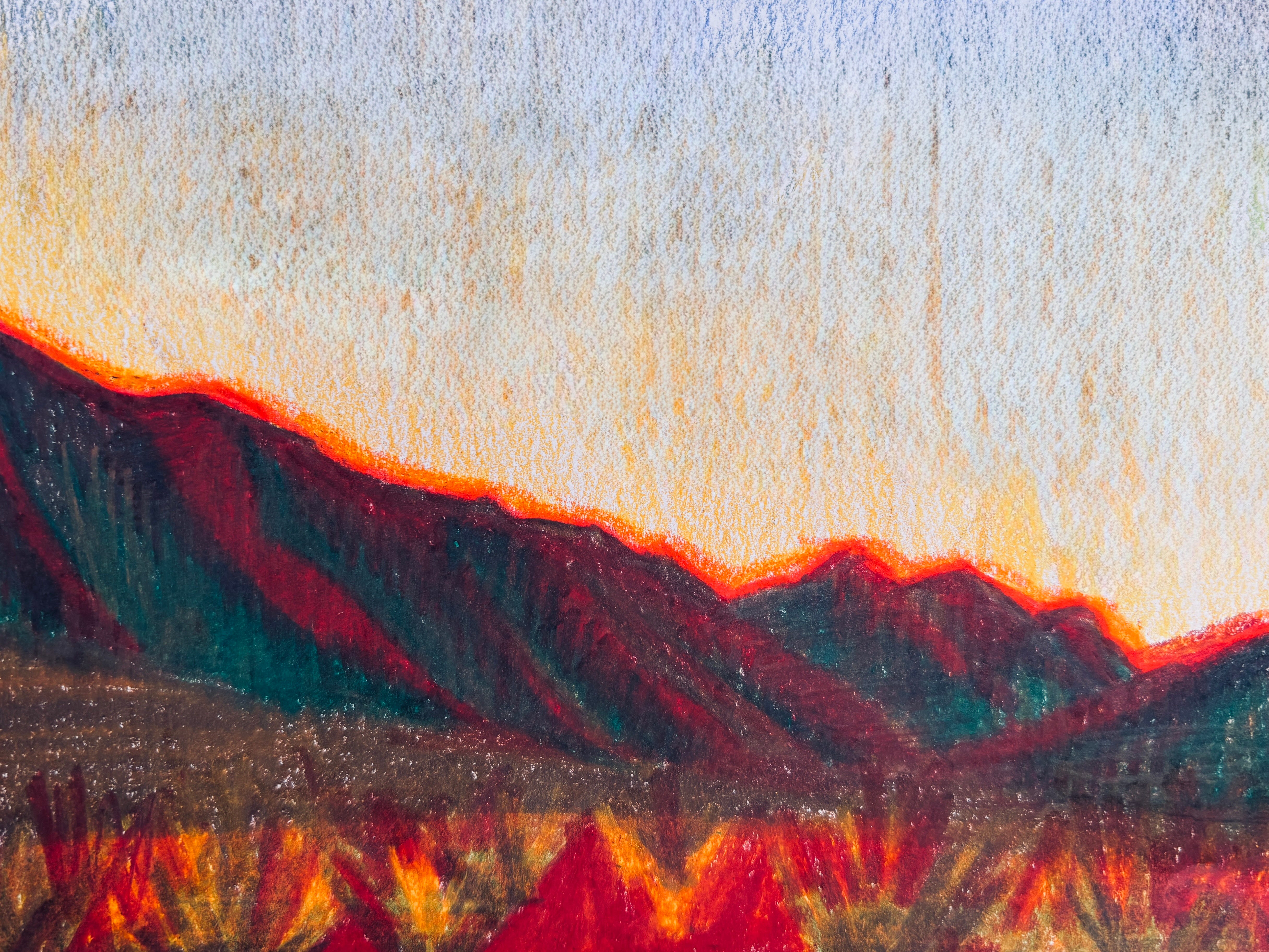
*The following address by Benjamin Samuels is the winning essay of our first New Critic contest. For a $1,000 prize, we asked respondents to address the question: “What Was College For?” Thank you to all who submitted, and delight in this extraordinary work.*
Benjamin Samuels is a 20-year-old graduate of Deep Springs College studying Economics at Bard College.
I have not lived for a very long time, but I have already made a handful of decisions which I deeply regret, among them my decision to write an article about Deep Springs College, my alma mater, called “What’s Better Than Harvard? A Year of Honest Work” for The Free Press. The article took me no more than a day or two, and when it was published, I received several thousand dollars.
Naturally, I would have written the article for free. It was a good writing credit. More importantly, it was an opportunity to burnish my school’s reputation. This responsibility was uniquely mine: at the time, I chaired Deep Springs’ Communications Committee and was tasked with broadcasting the college’s existence and merits to the rest of the world.
If you haven’t heard of Deep Springs, then (unfortunately for the Communications Committee) you are in the vast majority of Americans. The college receives only a few hundred applications per year, and once the Applications Committee is finished with its preliminary cull, only a few dozen serious applicants remain. Intense deliberation follows among the members of the Applications Committee, often stretching for multiple hours into the night, out of which emerge 13 ranked contenders and a short waitlist. At the eleventh hour, a few accepted students typically withdraw their applications in horror or indecision, and two or three students on the waitlist are tapped to take their place.
The finalized class is flown into Bishop, California and bussed an hour into the Sierra Nevada to a barren valley twice the size of Manhattan, with an abandoned prospecting settlement at its north end and a low-lying swamp, politely known as Deep Springs Lake, in the south. The college takes up a few square acres of irrigated land near the center, encircled by high, jagged mountains that rise steeply out of nothing. The valley itself is perfectly flat, smoothed by the northward passage of the glaciers at the end of the last Ice Age.
I will spare you the remaining details of this peculiar institution, since they have been told and retold with very little variation many times already — by students in The New Yorker and The London Times, as well as by professional journalists at CBS, The Economist, The Guardian, The Huffington Post, The Financial Times, Vanity Fair, Smithsonian Magazine, and, most recently, The New York Times (in addition to my own feature for The Free Press). You can pick any of these pieces to read at random, as the authors substantially agree with one another, although they respectfully space their coverage at three- or four-year intervals.
It was as the head of the Communications Committee, engaged in facilitating a visit by The Financial Times, that I first noticed this pattern. Whenever journalists visited the college, the article always seemed to turn out well. For instance, in 2009, as the college’s refusal to admit women became increasingly anomalous, Vanity Fair had written admiringly in “Cowboy Scholars” of the “academically elite college where 26 male students work a 2,500-acre cattle ranch.” After Deep Springs went co-ed in 2018, The Guardian shrugged, “[this] strange, beguiling institution in a desert valley where human purpose is debated amid coyotes and cows…will change, but perhaps not by much.”
And always you found in these articles the hatred of modernity and the handwringing about a “collapse of public trust” and a “castration of attention spans” — generously spiced, of course, with assurances that Deep Springs is “the most selective small university in the world,” that its students have an “average SAT score of 1500,” and that “many will transfer to the Ivy League.”
In the public imagination, Deep Springs was the best of both worlds. It was everything that everything else was not; it could not lose. So several months after Covid, as the outside world briefly turned its full attention towards cancel culture, I was pleased but not surprised when The Financial Times released its own report: “The U.S. College Where There Are No Culture Wars.”
I suspect that part of what makes Deep Springs so vulnerable to interpretation is the gaping hole at the college’s heart, a negative space which, elsewhere, is occupied by careerism. True, Deep Springers often find their way back toward New York City, and San Francisco, and Washington, D.C. But within the valley they are expected to keep their futures fastidiously blank. L.L. Nunn, the hydroelectric tycoon who founded Deep Springs in 1917, famously declared that his school would prepare graduates to “lead a life of service.” Yet what kind of service L.L. Nunn had in mind is not at all clear from his gnostic letters and writings, published as The Grey Book and distributed to every incoming class with a wink — as if for ambitious, well-educated Americans, blacksmithing or carpentry could be anything other than a pathetic self-indulgence.
So at Deep Springs the word “service” has been taken to imply something narrower. Namely, a humbling through work, and more specifically, ranch work: riding, herding, sorting, feeding, milking, branding, and slaughter — which is all unbelievably romantic. It is embarrassingly difficult for anyone, myself included, to shake the stubborn apprehension that they have stepped onto a movie set.
Whatever they may tell you, the romance of ranch work is typically what attracts both prospective students and visiting columnists to Deep Springs. Despite a brave attempt to stay focused on the lesser chores like cooking lunch, taking out the trash, and washing the dishes, the ranch was rather plainly what the New York Times reporter had in mind when she wrote “A Cattle Ranch is Doing What the Ivy League Can’t.” I am somewhat embarrassed to recall that the ranch was also in my mind when I wrote “What’s Better Than Harvard? A Year of Honest Work”: for the art, I eagerly supplied a photograph of myself operating a squeeze chute.
Unfortunately, because ranching is significantly more complicated and dangerous than, say, gardening, only two or three students from a given class are selected as members of the prestigious “Cowboy” detail, who work the ranch full-time under the unblinking supervision of the ranch manager, a mean old man who has been at the college for a long, long time. Most students do not become Cowboys. Some do not want to; some feel they are not good enough. Others both want it and feel that they are good enough, but cannot win the favor of the ranch manager. And still others manage to win the favor of the ranch manager, only to buckle under the enormous pressure of their own expectations.
The remaining students skulk at a certain distance from the dream, nervous that Deep Springs may have forgotten them. These students cycle through other labor details every couple months, gradually shedding their attachment to the valley and its inhabitants. Many park themselves in undemanding labor positions like Librarian, or Orderly, or Baker, spending their free time maintaining unhappy romances or watching television in their dorm rooms. They study mindlessly for subjects they often do not care about, looking forward to the cattle drives on which the Cowboys can lead them once more into the wonderful yonder. Exhausted, the Cowboys do not study at all.
None of this should reflect poorly on Deep Springs. As far as I can tell from my first year at Bard College, all the reports on my generation are true: the aversion to disagreement, the social isolation, the cheating, the sincere boredom with academics. To some degree, Bard is paralyzed by the very same distractions that Deep Springs has made it its mission to destroy. No doubt Deep Springs’ intensity is partly due to its rigorous admissions process, which selects both for nerdiness and for a kind of inexplicable meanness, a dogged self-discipline accompanied by equally ruthless standards for other people. (“Assholes,” suggested a very wise mentor and longtime Deep Springs professor to me once. “The word you are looking for is ‘assholes.’”)
But L.L. Nunn deserves some credit, too: for the college’s physical isolation, for its mandatory public speaking, and for its faith in the salubrious outdoors. I began to read and speak seriously at Deep Springs. All of my favorite college classes were Deep Springs classes; I met my girlfriend and all my closest friends there. I dearly miss moving irrigation lines on cold mornings, surrounded by big, indifferent cows. So far, I have experienced college proper as a severe let-down.
So I want to be careful not to be hostile to Deep Springs, because it is undeserved, but more importantly, because in doing so I am afraid I would be making the opposite mistake to the one I made by writing “What’s Better Than Harvard?” I would be treating Deep Springs as a real place, when instead I would like to present it as no more or less offensive than outer space.
That said, anyone who goes to Deep Springs should be aware that they are voyaging out into a truly impressive nothingness; the utter vacuum that remains after banishing all your cares, attachments, and responsibilities. I feel compelled to point out this absence of mind within the student body, which appears even in the most congratulatory articles, because it is exactly the same species of disaffection that is said to zombify traditional college campuses. “Most [students] speak slowly and deliberately, and eschew small talk,” noted The Economist in 2017. “They walk slowly, too.” A reporter for Outside Magazine in 2021 seemed more disturbed: “Most students ignored my presence completely…it wasn’t always amicable.” Most recently, while praising the college’s lack of reliance on janitors, the New York Times reporter paused to notice “a torn couch lying abandoned on its side outside the dorms. The students had gotten rid of it because it was infested with mice.”
On the whole, Deep Springers have absolutely no idea what they should do with their lives; upon graduating, they explode out of the valley and scatter like birdshot. However, they take no crap from people who seem dishonest or self-deluded about their own lives (as they evidently decided the Outside Magazine reporter was) and feel repulsed by the very idea of performing for them — even though it is in their own self-interest that the article turn out favorably, thereby confirming them in their decision to attend Deep Springs, which is always a source of angst and confusion.
But wait, they had done what with that couch? These students who had cultivated “a genuine, responsive relationship to the world, one in which we are touched by it and answer it in turn” had shuffled their old couch just inches out the door, left it to decompose into mouse shit, rather than carry it 50 feet to the dumpster?
That is the strange, vaporous Deep Springs I remember. It takes real effort to sustain the illusion of independence, to studiously ignore the arrival and departure of outside contractors, the shiny desktops in the library, the truckloads of groceries, the cash infusions for our failing ranch, and fatally, the college applications season, which consumes second-years for months in just the kind of embarrassing pre-professional fits which Deep Springs is supposed to exorcise.
These do not represent failures of Deep Springs any more than those magnificent John Deere combine harvesters represent a failure of agriculture, but they do undeniably represent the mass failure of our own dreams, without which remains only a village without children; a school without graduates; a farm without food. The harsh light this failure casts on the ambitions of Deep Springers — to be alone, to get away, to fend for ourselves — leaves the students melancholy. The journalists perceive this, and dutifully mistake it for thoughtfulness.
In conclusion, I would like to suggest that the much-touted problems with modern education are not really with education but with the current of our lives, and that to abandon “normal” college for “alternative” models like Deep Springs is only to dam the river and flood everything else. I do not know if this problem is old or new. But the impossibility of escape is precisely what frustrates Deep Springers and compels them to tell reporters, in interview after interview, that what is valuable about the college is, in the words of one current student, that “there is no place to hide,” and to say it with all the force and bewilderment of someone who has tried their very best to do so. As my mentor kindly reminded me after my graduation ceremony, it is difficult, especially for students, to separate Deep Springs from late adolescence.
So as I write this, I am making a special effort to be cognizant of my own barely subconscious desire to shutter the college, raze it to the level of the sagebrush, and let the dream disappear into the desert like an enormous tumbleweed. I think many of my fellow graduates have this urge somewhere inside them, even if it is accompanied, or crowded out, by gentler emotions.
Just before graduation, while riding back from a road trip with two buddies, I spotted Deep Springs — a flat patch of yellowed grass — through a break in the mountains and all of a sudden felt violently ill. I glanced over at my fellow second-year in the passenger seat and saw that he, too, had turned slightly green. He wordlessly played “Coyotes” by Don Edwards over the car speakers, a song which we had both recently heard for the first time in Werner Herzog’s Grizzly Man, a documentary about the dreadful fate of naturalist Timothy Treadwell at the paws of his beloved grizzly bears. The song called to mind nature’s ruthless insistence on tragedy, which seemed somehow apt as we both prepared to leave the valley and return to the East Coast.
My friend in the back seat, a first-year, seemed agitated.
“Man, I hate you guys,” he said.
“Poo-yip-poo-yip-poo,” we howled mournfully out the window.
There are several reasons why my experience of Deep Springs may have been atypical. For one thing, I was accepted at the age of 15, which might have been a bit too young, as it cast the college not as a new home but as an eerily protracted summer camp. Then again, older Deep Springers often feel out of place for the opposite reason; they feel they have aged out of the fantasy.
I also might have come to Deep Springs at the wrong time. During my two years at the college, the mechanic and garden manager were removed for harassment; the chef left after hurling a pot at a student; the president’s beloved German Shepherds nearly mauled another student, after which the president, threatened with the euthanasia of her closest companions, resigned; the operations manager became severely depressed, submitted a sorrowful letter to the student body, and left; after all of which our Dean, a very kind and peaceful man, quietly decided to take a posting somewhere else.
Within a few months of her arrival, our new chef became suspicious that her house was filled with poisonous gas — she felt sleepy and irritable all the time. A visiting professor whispered to a group of students that an uncommonly large proportion of Deep Springs faculty died of cancer, and warned us about the decommissioned nuclear testing sites nearby, to which we nodded, knowingly; a year later, she was killed by a car that flew unexpectedly off the highway and onto her grassy walking path. Of the staff members present when I arrived, only the grouchy ranch manager now remains, and of the 12 students in the class above me, five dropped out, a couple within just a few months of graduation. Another was expelled by a supermajority of the student body after a trial lasting several days, and two or three more were threatened with a trial if they could not pull themselves together. My class was quieter and less riven by interpersonal conflict; we had only one who left, hurtling out of the college and down the highway at 100 mph until he smashed his car into an electrical tower somewhere in Arizona. He returned the next week, concussed and subdued.
It is this thick, creeping cloud of spite, rage, and impotence that permanently shadows my memory of Deep Springs. Once, in the heat of a late-night student government meeting, a classmate rose and pointed his finger at me. He proposed we go out to the main quad to fight instead of arguing. That kind of thing made sense to me at the time, so we walked silently out to the grass, took off our shoes, and began to wrestle.
But neither one of us knew how to topple the other, so we just stood there for several minutes, silently straining. Finally, he bent toward my ear, and told me softly, “I’m going to kill you.”
Stunned, I relaxed, and he released me to the grass and walked away.

*Paid subscribers make possible all the work we do at The New Critic, especially projects like this essay contest. Subscribe for just $30 a year to access Postscript — our gen z interview series — or become a TNC patron by joining as a $250 founding member.*
THE YOUNG AMERICANS
 | A guest post by
|
Sometimes, I think I can write. Then I read an essay from another member of my class and am reminded that I should not delude myself…..
One or two more essays and the deep springs takeover of the new critic will be complete.