
PEE: $1
“Many people at The Mirror have dyed hair, and even more have piercings in their tongues, eyebrows, and noses.”

THE NEW CRITIC
Ryan Merrifield is a 20-year-old undergraduate studying Econometrics at the University of Illinois at Urbana-Champaign.
*In the third installment of our series on UIUC nightlife, apparently a particular fascination of our young magazine, one of our Illini correspondents explores an alternative faction on the fringes of Urbana-Champaign.*
At the edge of campus and at the end of my known world, I found myself approaching a house located in the residential section of Urbana. My Urban Planning-major friend David, who had taken the liberty of bringing me here, told me we had reached “The Mirror.” I’ve learned that urban planners are apparently well-acquainted with the local counterculture — David is a native in these parts.
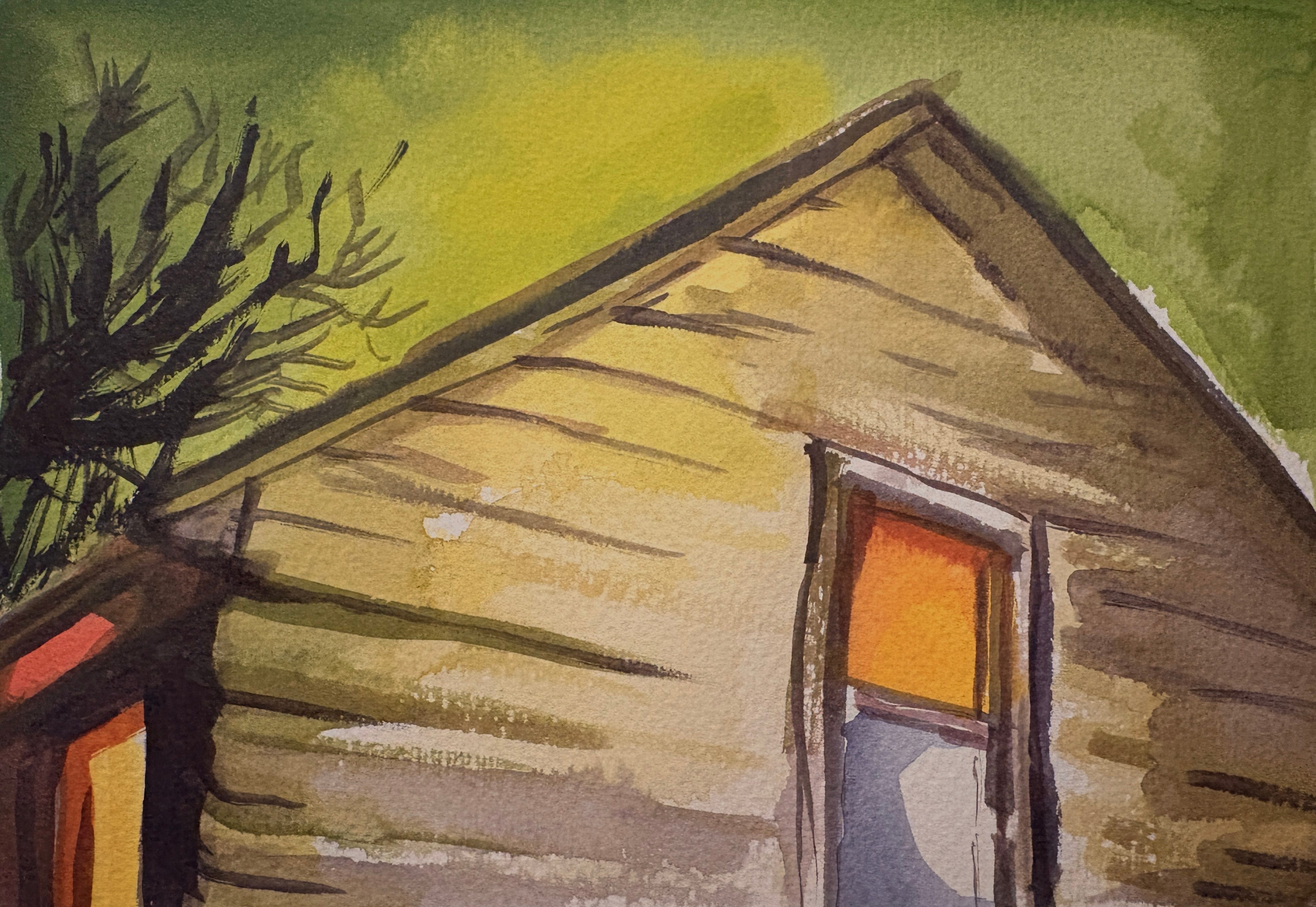
The Mirror, despite its mysterious, reflective name, is actually just an unremarkable home in a quiet neighborhood with a special twist: there is a large group of hippie-types who stand outside it. From across the street, the whole thing seems like some sort of Bohemian camp under a long, dark sky. Tonight, they have come to see ‘Terminus Victor’ perform. This is where these people have decided to spend their Saturday evening, and it’s where David and I have decided to spend our Saturday evening as well.
We showed up late. It’s just past eleven o’clock, and I can’t take my eyes off the entrance. There is a piece of furniture resembling a couch on the front porch occupied by a man smoking a cigarette. David and I speak to my vague acquaintance before heading around back to get inside. He tells me he is enjoying himself as he and David make wisecracks at each other.
Just inside sit two girls wearing smiles and manning a cashbox. They aren’t like bouncers at all. They are tender and lazy and give off the impression that there’s nowhere they would rather be. Instead of stoically scanning your ID card and waving you through, they make small talk and tell you, “Have fun.” You pay $8, with either the coin of the realm or with Venmo. I remember my first time coming to one of these as a naive freshman — I thought I was in a dream. The whole thing was so radically different from the school’s bar scene, which I was, and still am, afraid of and intrigued by.
My mother has told me many times that her four years at university were the best four years of her life and that they would likely be the best four years of mine. This is a nugget of wisdom she likes to repeat maybe once a year or so. My mother went to Illinois State, which is where she met my father. She pretended to enjoy country music, while he chewed tobacco and didn’t have to pretend to enjoy country music. My parents and their friends played darts, went to class, and lived off frozen pizza. At night, they drank beer out of plastic red solo cups and went to house parties they discovered through a flyer that was posted by the hosts earlier the same morning. It’s my understanding that these gatherings, largely impromptu and spontaneous, served to fill a simple need, one that still exists today: get drunk and stupid.
My father’s country idol, Johnny Cash, is now dead. He died in September of 2003, just four days before my sisters were born. Most of the other mythical country and rock ‘n’ roll heroes are on their way out, if they’re not dead already. When I play darts, I tend to leave small holes in the wall instead of the dartboard. And at many campus parties now, hard seltzer shows up where beer once did.
What hasn’t changed is that college kids drink — a lot. The University of Urbana-Champaign is no exception — there’s no shortage of what you could call street life — people flock every single day of the week to one of the big three campustown bars. It’s an obscene and thrilling experience to be inside one of these sweaty, packed locales at 11:00 p.m. CST on a Tuesday evening. These campus bars are dominated by a mysterious Greek-run hierarchy that I find hard not to associate with the mystique of Freemasonry; the whole operation is regarded as essentially Greek-run, but unaffiliated crowds show up unabated day after day regardless. I myself have waited in an hour-long line only to be told I must pay an absurd $30 cover or go home. Cover is their bread and butter, it’s their money printing machine that never gets turned off. Make no mistake: this is their Greek playground, everyone else is just visiting.
I can’t help but reflexively compare my parents’ stories to my own university experience, where a good 80% of my alcohol consumption comes from drinking before and during a visit to one of these campus bars. I’m aware of how much of a scam it is, but I show up anyway, and so do the rest of my peers. The remaining fifth of my boozing comes from a source that reminds me of what must be the spiritual cousin of the parties my parents describe: the House Show, of which The Mirror is a part. We don’t live in the ’90s anymore, but people will always need a place to drink. The song remains the same: where there is demand, there is supply.
UIUC’s House Show scene is a circuit of musical venues scattered in Urbana’s outskirts. Unlike the bars, which even open for morning drinking on Saturdays, DIY venues like The Mirror usually only hold events on Friday and Saturday nights. These venues aren’t unique in fulfilling the previously mentioned Demand-to-Get-Drunk that my parent’s generation so lauded, but it certainly cultivates a unique crowd. Much less sectarian and more decentralized than their bar counterparts, the House scene is more flexible with its unspoken codes. The people who live in the venue and manage the show can often be found blending in with the crowd. Drinks are sold inexpensively at $2 a can (I’ve never tried to establish the liquor license logistics of these operations). It’s easy to let myself feel justified pouring dollars into what I like telling myself is some sort of ill-defined and abstract ‘movement’ or ‘culture,’ contrasted with the cash-cow machine that the major UIUC watering hole establishments are proudly disguised as. I get a very similar kind of crowd-induced buzz from The Mirror as I do from the mainline Green Street bars, but the similarities end somewhere around being drunk and loud in a tight crowd.
A typical House Show consists of bands (or DJs) who play a set for maybe an hour or two before the next performer comes on and does their business. Tonight it’s ‘the florist.’ and next week it could be ‘OR D0ES IT EXPLODE’ or ‘Brain Sex.’ There is a wide variation in genre: bands range from thrashing power-chord Nirvanish angst to ethereal and hypnotic sounds reminiscent of something you would hear off one of the more experimental Velvet Underground albums.
Champaign-Urbana has local music history in spades. Most notably, the city was a central hub of the burgeoning indie pop/rock scene during the ’80s and ’90s. American Football, among the most prominent of the Midwest emo pioneers, formed in Urbana. The inconspicuous house used for their debut album cover is only a stone’s throw from campus; it is regarded as a sort of Mecca for the pilgrims that come to see it. Going back even further, the classic rock group REO Speedwagon was formed by a group of UIUC students in a dorm basement in the ’60s, where they started off playing covers of The Beatles and The Doors. Before they became a commercial success REO used to perform at the campus bars, back when the bars still had live music. The cycle continues at House Shows today — covers (hits hailing from Black Sabbath, The Police, Radiohead, and The Cranberries) and original tunes — oftentimes it’s a mix of both.
Tonight at The Mirror, it seems to be all originals, which certainly makes for a challenging sing-along. But I am undeterred and try anyway. No two groups performing are the same, and not all bands possess the same level of technical-artistic prowess, but it’s hard not to appreciate the talent and drive of live music whenever you’ve got the opportunity to hear it. Those who have already performed join the ranks of the audience, stage-sweat still drying. It never ceases to amaze me that these are regular people my age who are capable of creating and performing their craft at a high level. It’s easy to idolize a musician that you’re fond of, but it’s bizarre to actually talk to one in a casual setting and realize that they’re not as extraordinary or mythical as they seem on stage.
Many people at The Mirror have dyed hair, and even more have piercings in their tongues, eyebrows, and noses. The fashion is a melting pot from the past five decades; it’s the opposite of what is typically considered a going-out uniform. I notice the room has become tremendously hot, and we are sweating buckets. It is loud and crowded and I am filled with the urge to nod my head along with the groove of the bass guitar, if only because that’s what everyone else is doing — I like to imagine myself as being similar to the others in this crowd, for reasons real or imagined. The dregs of the late-night crowd is an enormous and unintelligible pit of sound and smell that overwhelm my nervous system. The people here seem to move like fiends, never resting, always standing, and rotating, and jumping, and twisting. In this respect, the venue isn’t so different from your typical bar. No one stays in one place for too long, and everyone is permanently sweaty.
In between sets, we spill outside and find ourselves under the Milky Way; the backyard proves to be a distinct but just as fearsome beast. Smoke fills the air; people sitting in circles pass around tobacco or marijuana. In warmer months, venues like this often have a fire burning out back, and it makes the crowd seem much smaller than it really is.
The outdoor air feels remarkable after being trapped inside for so long. Large groups of people congregate around the yard and at the back door, exchanging pleasantries, jokes, vapes. David and I apply the same rule as inside: find someone who looks interesting, and ask them about their LinkedIn. This is a bit that stopped being funny a long time ago, but I still deploy it compulsively — like a nervous tic that kicks in when I’m on autopilot. If the venue gets too popular and the hour is late, there’s a good chance there will be a line to get back into the house proper (this is called “capacity,” and we’ve all faced its slings and arrows at some point or another).
We run into a middle-aged man with enormous brown, gleaming eyes wearing a pinstripe suit. He is the only one of his kind here, and he does not bother with appearances. He is sitting on a folding chair. I interview the pinstripe man and several others in the interest of honest, boots-on-the-ground journalism, asking about life stories, the personal appeal of a House Show, and what it has that the bar scene lacks. The suited man begins emitting personal information at a great rate; he is a Chicagoland performer who has been in the game for a while. He is here merely because this is where opportunity/fate has brought him this evening. I ask about his musical influences: he lists off a slew of names I don’t recognize, and I vigorously nod my head in approval, a shallow attempt to disguise my bewilderment. Suddenly, I become paranoid that he has (not incorrectly) pegged me for a drunken buffoon, and I stop talking to him prematurely.
After we meander away, David is recognized by a young man and his lady friend (recall my earlier remark about urban planners always seeming to know someone). The couple tell me they are from my neighborhood back home, and they list off the names of middle school classmates and gym coaches. We discuss the local grocery store and exchange opinions on our various grade school teachers. I search my memory for their faces and recognize neither; it’s a slightly off-putting and surreal experience. I interview them in the same fashion as the pinstripe man, asking questions about the venue’s history and what brought them here. I will never listen to these pseudo-interview voice memos in my life. Even hearing a brief sample makes me wince. I am drunk and stupid and laugh in between everything I say. I like to think they get a kick out of me if nothing else, and I’m curious to find out if I’ll ever see these two again. This is a large part of the appeal: you’ve got the same chance of meeting an enormous eccentric man wearing a King Julien-esque palm frond crown at one of these events as you do some pretentious artsy type who thinks he’s got everybody figured out, and you’ll get kicks from both. Chance encounters are the spice of life.
We rotate back toward the entrance, where I get the chance to ‘interview’ Rito, a drummer for one of the bands whose set we missed. Rito also functions as a door guy, and he shows me his door guy playlist. Right now, “Crosstown Traffic” by Jimi Hendrix can be heard from a small speaker, mixing with the sounds of the shoegaze band and the chatter of the crowd inside. Unlike the musical inspirations of the pinstripe man, Hendrix is a name I admire, and I make sure Rito knows I have his likeness framed on my wall. We briefly discuss the great bygone bluesmen of the ’70s, and Rito gives me his two cents on the House Show scene, which will not be relayed here because I cannot remember what he said, and I refuse to listen to the voice memo. I have no doubt his insider information was insightful and cool. Rito is the type of person that makes these adventures worthwhile. He’s easygoing and makes me feel listened to; he smiles at whatever I say. He has what could be called “an engaging manner,” or a talent for putting you at ease. Someone you could feel good about voting for in an election.
Whatever you want to call it — a movement, a pseudo-movement, a bunch of bums/freaks, whatever — it must be discussed that the ‘house’ element of The Mirror house creates a bathroom situation that is much, much worse than that found in the bar scene. Lines often stretch in excess of a dozen waiting people and become microcommunities within themselves. While waiting for the bathroom, I become acquainted with the people in front of and behind me. Lines are everywhere in life — The Mirror is not immune. Given this, it’s not uncommon to just take care of business outside (a penis-wielding man considers himself blessed under these circumstances). As a working-class neighbor of The Mirror, this would trouble me, but as a student, I’m able to recognize and almost appreciate the strong correlation between drink and urine. If you’re letting the good times roll, you constantly need to pee — finding a secluded patch of ground to urinate on fits in nicely with the whole DIY aesthetic of the venue. This just simply isn’t the sort of behavior that would fly at a bar.
If you do end up making it inside The Mirror’s bathroom, it is not unlike any other crowded establishment: inscriptions and prophecies are carved into the bathroom walls. Sometimes it’s a stupid one-liner, and sometimes it’s a name, and sometimes it’s nothing. The Red Lion, one of the bars that REO Speedwagon used to perform at, has the esteemed and aptly named “Cocktagon,” seven urinals and an entrance that create a gleeful in-and-out operation — for gentlemen, at least. The ladies line is outside my realm of experience.
A different House basement I’ve been in actually had “PEE: $1” written using electrical tape on the wall in the corner of an abandoned side room with a run-down furnace and exposed HVAC. Whether or not this invitation was ironic or genuine is ambiguous to me, but the tape certainly felt mysteriously significant when I saw it. The reader may interpret this however they wish. But I’ll say no more about bathrooms, except that in both bar and House, they are sticky and pee-soaked and culturally significant in giving their occupant(s) a moment’s respite from the chaos unraveling just outside their walls.
David and I have decided that we’ve finally gotten our fill. David has a tendency for Irish goodbyes, and I have no intention of being left alone in a crowd of strangers. It doesn’t take long to feel sweaty and sluggish at a House Show, and I’m vaguely aware that the rest of our group has already disappeared. We wander out and negotiate through several dark, mysterious blocks back home. The residential part of Urbana is populated with large, beautiful houses, some with wacky, jungle-like lawns. When our paths diverge, I bid farewell to David and we go our separate ways. Upon reaching home, I mumble something about journalistic integrity to my housemates before I crawl into bed still donning my jeans and contact lenses.
Urbana is a much more sinister town in the morning. The thrill of the night is already a fading but cherished memory, slowly being replaced with the early symptoms of a radioactive hangover. My eyes feel sticky, my head feels heavy, my teeth feel slimy, and getting out of bed is a challenge. From my third-floor window overlooking Lincoln Avenue, early morning dog walkers and the more studious of my peers are already going about their daily business. There is the primordial soup of human life going on outside my window, and I’m lucky to have a quality view that lends itself to good people-watching. Through the veil of my lazy haze, they remind me of ghosts, and the thought occurs to me I will join them as a ghost myself when I inevitably reunite with society later this afternoon. The weekend is ending, and I must once again behave like a normal citizen instead of a rabid squirrel.
Has anything real, anything profound and meaningful, come from this? Have I gained a deeper knowledge of myself? Is there anything of value, tangible or otherwise, to be had from my account of all this? It is unlikely.
Am I heavily romanticizing my weekend as some sort of great feast of countercultural communal life, looking to give it the proper justification I know it doesn’t really deserve? This is unquestionably true, to an extent.
But that’s just the thing with personal experience: it’s impossible to fully articulate with words. I could try and tell you that I felt fully awake, with a clarity of mind that I can only, ironically, induce with the time-tested cocktail of Cheap Substance + Big Crowd, but whatever language I use cannot fully translate what the night meant to me while I was in the middle of it, and in the middle was where it was maddest. Perhaps this is largely self-serving, and trying to assign value to my evening as some sort of sophisticated, transcendental night is simply a well-crafted defense mechanism, enabling me to soak my weekends in escapades of debauchery and nonsense. Whether I’m self-aware or not, I don’t think that’s the whole truth. I take comfort in knowing I felt alive, and maybe that’s why nights like these matter.
Like many others, when I turned eighteen, I decided I needed to establish a radically new personality and sense of self. I fancied myself a cynical-nihilist-hippie-type, and all I have to show for it is a total uncertainty about what sort of person I really am and a Pink Floyd Dark Side of the Moon tattoo, which I don’t necessarily regret but also have to coexist with for the rest of my days. For a long time, it was hard to shake the impression that my whole life, I had been something of a fraud, constantly seeking the approval and admiration of others without ever considering what I really wanted to get out of life.
I now understand that realizing that everyone has these doubts and that we’re not really as unique as we believe is a universal rite of passage characterizing one’s waning years of teenagerdom. This isn’t necessarily a bad thing. We dump so much time and energy into cultivating how others perceive us, but the irony is that other people are usually far more concerned with their own image than with ours — insecurity makes it easy to forget that. With this in mind, I consider the House Show as having a special sense of community, stronger than any bar excursion I’ve had on campus, for no specific reason I can point to or explain to anyone. A strange and brief feeling of being maximally loved by the universe, of really living in the moment — or maybe just the absence of that subconscious alienation you feel at a bar — is what I would identify as the heart of the House circuit’s appeal, regardless of whether it’s some ephemeral mirage or truly part of a living, breathing, tucked-away musical organism populated by Ritos and sweet cashbox attendees.
As that wise sage of the ’60s Hunter S. Thompson once wrote:
“Maybe there is no Heaven. Or maybe this is all pure gibberish — a product of the demented imagination of a lazy drunken hillbilly with a heart full of hate who has found a way to live out where the real winds blow — to sleep late, have fun, get wild, drink whisky, and drive fast on empty streets with nothing in mind except falling in love and not getting arrested . . . Res ipsa loquitur. Let the good times roll.”
In the end, I find myself left with a few certain, military-grade truths. Abstract questions of “true meaning” aside, the world, in my eyes, has become a slightly smaller place, and to me, this is a good thing. The Midwest is a big, flat, and at times, lonely place, and having the means of mitigating that peculiar loneliness can go a long way. If I’ve learned anything from this, it’s that house parties and House Shows will not go the way of the dodo, Johnny Cash, and hitchhiking. The constituent people and culture of the scene might change, but the warmth and essence isn’t something that can be stamped out.
Willie Nelson is 92 years old, and I can’t help but grimly wonder when he will die. I can’t help but wonder when I will die, but it’s comforting to know that between the bookends of my birth and death, there exists a brief, outrageous glimmer of youth, noise, heat, and piss. I like to imagine that Willie Nelson feels the same. Tomorrow, I will go back to class and continue to chip away at what I really hope are the best four years of my life. Nobody knows what’s going to happen to anybody besides growing old. That much is not voodoo. If you ever find yourself in central Illinois, or anywhere there’s a good time to be had, stop by and see for yourself.

*Our essays are always online and always free, but individual donors keep The New Critic alive — we’re only 7 paying members from the 100 mark!
With a paid subscription, you can access the entirety of Postscript — full conversations, new weekly installments, and the complete archive of our gen z interview series.
The $30 annual rate costs as much as a couple paperbacks or movie tickets, and our $250 founding members are our most ardent patrons, those who wish to advance our wildest editorial ambitions.
If you take solace or delight in The New Critic, this flesh-and-blood gen z magazine, do consider a subscription!*
THE YOUNG AMERICANS
 | A guest post by
|
The Mirror is so fun!!!
This is actually incredible wtf